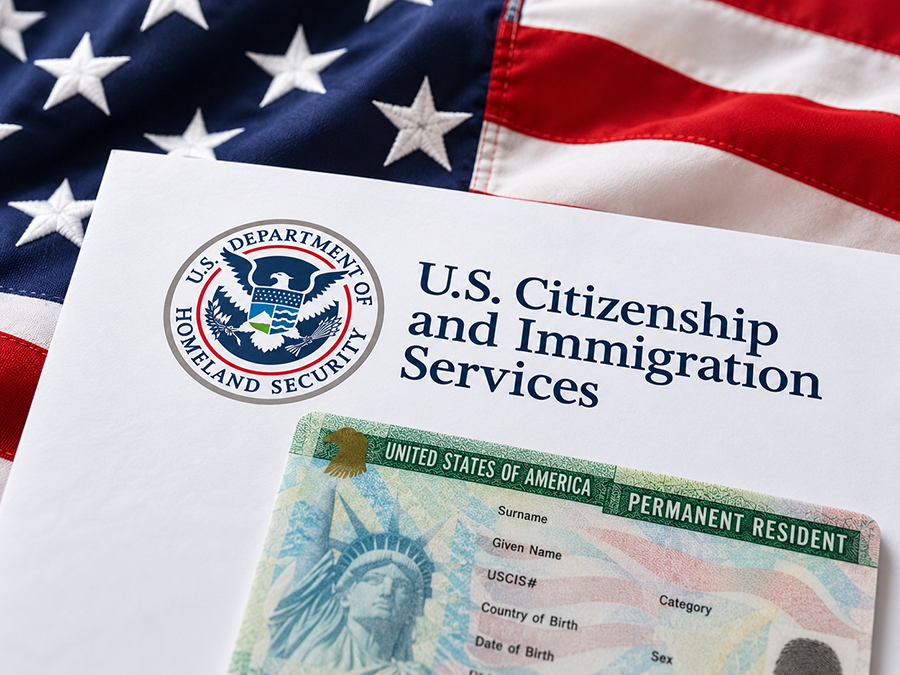
Yes, you can travel while your green card application is pending—but only under specific conditions. The critical rule is that international travel without an approved Advance Parole document will cause USCIS to consider your green card application abandoned. However, you can travel domestically within the U.S., and you can travel internationally if you obtain advance parole or maintain valid nonimmigrant status before departure. Your options depend on your immigration status and whether you secure the required authorization before you leave.
Official resources:
- USCIS Form I-131: Application for Travel Documents — Use this page to review requirements and apply directly.
- USCIS Policy Manual: Travel Outside the United States — Use this primary source to verify the official guidance.
Table of Contents
- International Travel Without Authorization Abandons Your Application
- How to Authorize Travel—File Form I-131
- Exception for H-1B and L-1 Visa Holders
- Domestic Travel Is Always Permitted
- Advance Parole Protects Your Application, But Not Your Return
- Frequently Asked Questions
International Travel Without Authorization Abandons Your Application
If you depart the United States while your form I-485 (adjustment of status) is pending and you do not have an approved Advance Parole document, USCIS will consider your green card application abandoned. This is not discretionary—leaving without authorization is treated as withdrawal of your case.
"Abandonment" means USCIS closes your file permanently. You cannot resume the application later; you would have to restart the entire green card process from the beginning if you want to reapply. Even a brief international trip without advance parole carries this consequence.
How to Authorize Travel—File Form I-131
To travel internationally while your green card application is pending, you must request an Advance Parole document before you depart. The Form I-131, Application for Travel Document, is the form adjustment of status applicants use to request advance parole. You file it with USCIS and must wait for approval. A critical requirement: advance parole must be approved and in your hands before you depart.
USCIS will not process your Form I-131 after you leave the country. You cannot travel until the document arrives. Processing times are unpredictable. USCIS does not post a standard processing time for I-131 advance parole requests because it processes cases with varying priorities rather than on a first-come, first-served basis. You should file well before your planned departure to allow adequate time for approval.
Exception for H-1B and L-1 Visa Holders
The abandonment rule has a significant exception. Applicants who maintain valid H-1B, L-1, H-4, or L-2 status can travel abroad and return to the U.S. without abandoning their pending I-485, provided their nonimmigrant status remains valid at departure and return. If you are on an active work visa and your visa does not expire while you are abroad, you can travel internationally without filing Form I-131.
This exception applies only to these four specific visa categories, and only if your status is actively valid. If your H-1B expires during your trip, your visa is not yet approved, or you have let your status lapse, this protection does not apply. Verify your visa validity and expiration dates before booking travel.
Domestic Travel Is Always Permitted
In contrast, traveling to other U.S. states while your I-485 adjustment of status is pending will not jeopardize your case. Trips within U.S. borders do not cross international boundaries and do not trigger abandonment rules. You can travel freely to any state during your pending application. This applies whether you are waiting for biometrics, an interview, or a final decision. No authorization or special permission is needed for domestic travel.
Advance Parole Protects Your Application, But Not Your Return
An approved Advance Parole document authorizes you to travel and protects your I-485 from abandonment, but it has a significant limit. Advance parole does not guarantee admission to the United States. The document grants parole authority, but U.S. Customs and Border Protection makes a separate discretionary decision whether to parole you into the country at each port of entry upon return.
This means that holding advance parole protects your green card application while you are abroad, but CBP can still deny your reentry for independent reasons—criminal convictions, security concerns, or other grounds for deportability discovered during your trip. The advance parole document is necessary for protecting your application, but it does not guarantee you will be allowed back into the country.
- —
Frequently Asked Questions
How long does it take USCIS to approve a Form I-131 advance parole request?
USCIS does not publish a standard processing time. Timeline varies based on case complexity and agency workload, which is why you should file well before your intended travel date to allow sufficient time for approval.
Does one advance parole document cover multiple trips abroad?
No. Each advance parole document is valid for one trip outside the United States and back. If you travel again, you must file a new Form I-131 and wait for another approval.
What if you already left the country without advance parole?
Your I-485 application has been considered abandoned by USCIS. Consult an immigration attorney immediately about your options, as you would need to restart your green card application process.
Do you need to carry anything special when traveling with advance parole?
Yes, you must carry your approved advance parole document itself (not just a copy) when you leave and when you return. Customs and Border Protection will need to see it upon reentry to confirm your travel was authorized.