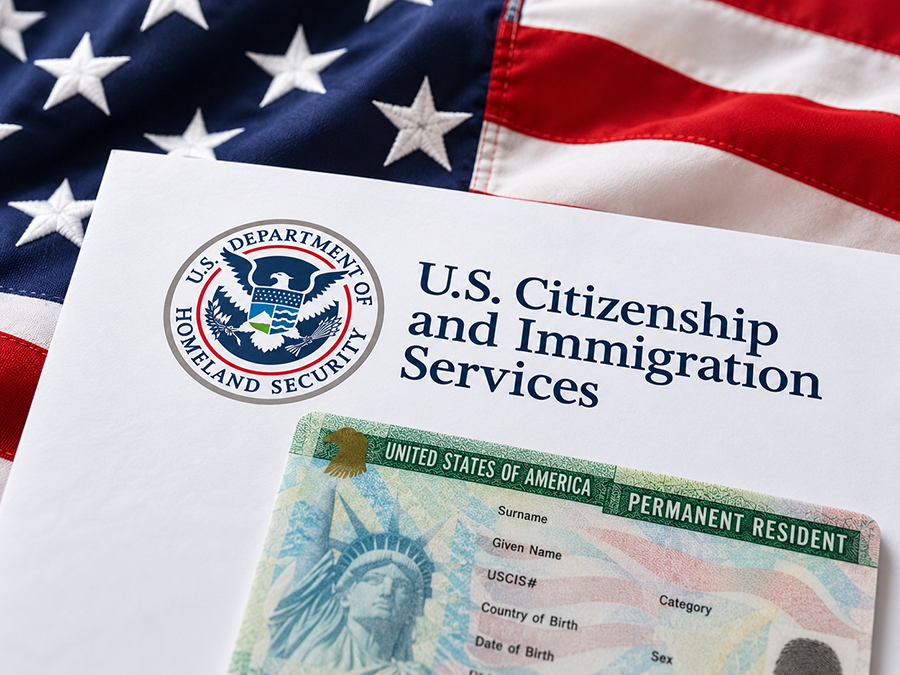
Several of the immigration fees created by last year’s federal budget law go up on October 16, 2026, and USCIS will reject any filing postmarked on or after that date that comes with the old amount. The increases are small, between 3 and 30 dollars, but a rejection costs time that many applicants do not have.
The notice published in the Federal Register on October 1 is the second annual inflation adjustment to the fees H.R. 1 imposed on asylum, parole, work permit and TPS applications. The affected groups are the same ones that have absorbed every other cost increase in the past year: people with pending asylum cases, parolees, TPS applicants and anyone applying for a first work permit in those categories.
The New Fees
Four fees change; the rest of the H.R. 1 schedule stays put.
| Fee | Form | Until Oct 15 | From Oct 16 |
|---|---|---|---|
| Annual asylum fee for pending cases | I-589 | $102 | $105 |
| Initial work permit for asylum applicants, parolees and TPS applicants | I-765 | $560 | $570 |
| TPS application | I-821 | $510 | $520 |
| Immigration parole | I-131 | $1,020 | $1,050 |
Not changing: the $100 fee for filing a new asylum application, the $275 work permit renewal for asylum applicants, the $280 renewal for parolees and TPS holders, the $280 re-parole work permit, the $250 Special Immigrant Juvenile fee and the $24 I-94 fee. The law rounds most adjustments down to the nearest $10, which is why a 3.4 percent increase moves some fees by $10 and leaves others alone; only the annual asylum fee rounds to the nearest dollar.
These H.R. 1 fees are paid on top of the regular USCIS form fees, not instead of them. The parole fee is the one exception to the postmark rule: it is not paid when you file Form I-131 but later, online when USCIS conditionally approves parole or at the port of entry when CBP paroles you in, so the $1,050 amount will apply to grants on or after October 16 rather than to filings.
How Each Fee Works
The annual asylum fee is the one with teeth. Every calendar year an asylum application stays pending, whether at USCIS or in immigration court, the applicant owes the fee again. USCIS sends a notice saying how much is due and when. Under a rule that took effect May 29, 2026, an applicant who does not pay within 30 days of that notice has the asylum application rejected, any pending work permit application based on it denied, any existing asylum-based work permit cancelled immediately, and, if the person has no other status, removal proceedings started. A federal court in Massachusetts has since blocked USCIS from automatically rejecting applications for nonpayment while a lawsuit over the fee continues, but that order could be lifted at any point and does nothing about the lost work permit.
The initial work permit fee hits asylum applicants, parolees and TPS applicants on their first I-765 in those categories. Renewals cost less, but TPS work permits are now limited to one year or the remainder of the TPS designation, whichever is shorter, so renewals come around more often than they used to.
The TPS fee is owed at every registration, initial or re-registration, alongside the regular form and biometrics fees. For countries whose designations are short, that can mean paying the full stack more than once a year.
The parole fee is charged once per grant, with narrow exceptions written into the statute for situations such as medical emergencies, organ donation, funerals and law enforcement needs. Anyone paroled in without an exception pays it, including people released from ICE detention on parole and the remaining beneficiaries of humanitarian parole programs.
None of these fees can be waived or reduced. H.R. 1 wrote that into the law itself, so USCIS cannot grant a hardship exception even if it wanted to.
Why Fees Keep Rising
These fees did not exist before July 2025. H.R. 1, the budget reconciliation law, created them from scratch: a first-ever $100 charge to apply for asylum, a $100 annual fee for every year the case stays pending, a $550 charge for a first work permit in the asylum, parole and TPS categories, a $1,000 parole fee, and a tenfold jump in the TPS fee from $50 to $500.
The law then requires DHS to raise each fee every fiscal year by the change in the consumer price index, about 3.4 percent for this round. Because the adjustments compound, the fees will climb every October from now on without any new vote in Congress.
The sequence so far: the law was signed July 4, 2025; USCIS began collecting the asylum, work permit and TPS fees on July 22, 2025; the parole fee went live October 16, 2025; the first inflation adjustment was announced November 21, 2025 and took effect January 1, 2026; the rule setting consequences for unpaid annual asylum fees took effect May 29, 2026; and the second adjustment, announced October 1, takes effect October 16, 2026. Expect the third around the same time next year.
What to Do Before October 16
If you have a filing ready to go, mail it now. A postmark of October 15 or earlier locks in the current fee, and the savings are real for a family filing several applications at once. Use a mailing method that gives you a dated receipt; the postmark, not the date USCIS receives the package, is what counts. Online filings go by the submission date.
To see what is at stake, add up a real filing. An asylum applicant mailing a first work permit application on October 16 pays the regular I-765 fee of $520 (or $470 online) plus the $570 H.R. 1 fee, about $1,090 for one document. A TPS holder re-registering and renewing a work permit pays the $50 I-821 fee, $30 for biometrics, the $520 TPS fee, the regular I-765 fee and the $280 renewal fee, close to $1,400 for one year of status and work authorization. A family of four re-registering for TPS together can clear $5,000 in a single mailing. Check the regular fees on the USCIS page for each form, since those change on their own schedule.
If you will file on or after October 16, check the amount twice. The most common mistake after a fee change is using an old form instruction sheet or a checklist from an attorney’s website that has not been updated. Confirm the figure on the USCIS fee page for the specific form on the day you file. Write separate checks or money orders for the H.R. 1 fee and the regular form fee when the instructions call for it; a single payment covering both can be bounced.
If you are paying the annual asylum fee, the new amount should appear on notices issued from October 16; pay exactly what your notice says. If you are an asylum applicant and cannot pay, do not assume the Massachusetts ruling protects you; talk to a legal aid organization before the due date on your notice.
If a filing is rejected for the wrong fee, USCIS returns the whole package, and for an asylum application it keeps the $100 filing fee, so you pay it again on refiling. You can refile with the correct amount, but the new filing date is the day the corrected package is postmarked. For a work permit renewal, that can mean a gap in authorization; for TPS, missing the registration window can mean losing status altogether. Build in time for a second attempt.
The larger point is that the cost of staying in the system keeps rising for the people least able to absorb it, with no end in sight. For anyone with a pending case, the practical defense is to file early, file accurately and keep every receipt.