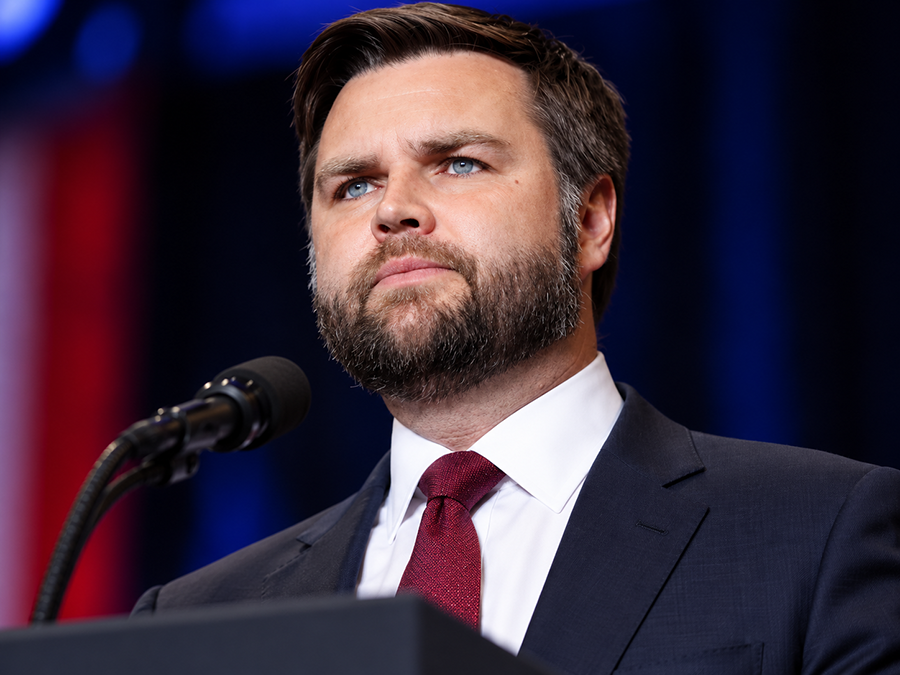
Vice President JD Vance said on Thursday that the H-1B visa program is completely broken and that he would support eliminating it outright, the hardest line a senior administration official has taken publicly against the country’s main skilled-worker visa. He made the remarks in an interview with Jack Posobiec aboard Air Force Two that aired October 1 on Real America’s Voice.
The timing matters. A day earlier, a second federal judge had blocked the administration’s $100,000 fee on new H-1B petitions, leaving the White House with no working tool to restrict the program and the vice president, who is widely seen as the Republican front-runner for 2028, publicly calling for its end. For the estimated 730,000 people living in the United States on H-1B status, plus about 550,000 spouses and children on dependent visas, the message from the second-highest office in the country is that the program they built their lives on should not exist.
What Vance Said
The core of it: the program is completely broken, he would be very supportive of just eliminating it, and while it exists the administration’s job is to protect American workers. To people frustrated that it still exists, his advice was to tell their congressman to fix it.
He said the program had been totally taken advantage of, and he named the culprits more broadly than usual. Technology companies get most of the blame in this debate; Vance added accounting firms and other employers to the list. His example was an employer bringing in an accountant at $45,000 a year to replace an American accountant making $60,000, which he said is not using the program to bring in a genius but destroying American jobs and defrauding the American people. He left the door open for the other use: if a company wants to bring a genius into the United States, that is a conversation he is willing to have.
This is further than Vance has gone before. On the All-In podcast on September 16 he defended the $100,000 fee and said the H-1B should not exist to replace American workers with low-wage foreigners but should exist to enrich the American economy, a formulation that assumes the program survives. On September 24 he posted that the administration would not let corporate America lay off American workers to replace them with cheap foreign labor. Two weeks later the line is that the program should not exist at all. There is a tension in his own framing: in September he said he was pursuing administrative changes because he did not expect Congress to overhaul the system, and on Thursday he told viewers that Congress is where the fix has to come from.
Donald Trump Jr. endorsed the comments within hours, saying anyone who disagrees with Vance on this is an open-borders supporter. On the same day, Representative Beth Van Duyne of Texas introduced a bill that takes the opposite approach, keeping the program but raising penalties and extending sponsorship bans for employers caught displacing American workers. The two positions mark the range of Republican opinion: fix it harder, or kill it.
Where H-1B Policy Actually Stands
The administration’s main weapon against the program has been a $100,000 fee on new petitions for workers outside the United States, imposed by presidential proclamation in September 2025 and renewed by a second proclamation last month. It has now been blocked twice. In June, a federal judge in Boston ruled in a suit by 20 states that the fee violated federal law, and the First Circuit refused to pause that ruling in July. On September 30, Judge Haywood Gilliam in Oakland blocked it again in a case brought by unions, employers and nonprofits, finding that USCIS and the State Department skipped the notice-and-comment process required before imposing a charge of that size. His order covers both proclamations and stays in place until the agencies complete proper rulemaking. A third judge, in Washington, D.C., had earlier sided with the government, so the question is likely headed to the Supreme Court.
The fee barely functioned even when it was in force. Court filings show only 70 employers nationwide paid it in the first five months, suggesting its real effect was to freeze overseas hiring rather than raise revenue.
DHS is trying a different route. In August it proposed a regulation creating a permanent fee of $103,265 on many H-1B petitions, this time through the formal rulemaking the courts said was missing. That proposal is unaffected by the two injunctions. The department has also moved to replace the random H-1B lottery with a wage-weighted selection that favors higher-paid positions, and a September 18 executive order directs Labor, State and DHS to weigh an employer’s recent and planned layoffs of American workers when reviewing its H-1B petitions.
The program itself is set by statute: 65,000 new visas a year plus 20,000 for holders of U.S. advanced degrees, with Indian nationals receiving about 71 percent of approved petitions in fiscal 2024. Neither the vice president nor the president can eliminate it; only Congress can.
What This Means for H-1B Workers
Nothing changed on Thursday for anyone already in H-1B status. Your visa, your extension and your pending green card case are governed by the same statute and the same regulations they were a week ago. The vice president’s opinion is not a policy.
What changed is the signal. When the second-ranking official in the government says a program should not exist, employers hear it. Expect more companies to hesitate before sponsoring new H-1B workers, especially from abroad, and to lean harder on candidates already in the United States who can change status without triggering the fee. Expect more scrutiny of petitions, more requests for evidence and slower processing as USCIS adjusts to the political weather.
The $103,265 regulatory fee is the thing to watch. If DHS finalizes it, sponsoring a new worker from overseas costs more than $100,000 extra, and many smaller employers will stop doing it. Anyone planning to enter the United States on a new H-1B in 2027 should assume the fee may be in place by then and talk to the sponsoring employer now about who pays it.
If you are on H-1B and eligible for a green card, file. The I-140 and, where the priority date allows, the I-485 move you from a status the administration wants to end to a path it cannot easily close. The same goes for the people most exposed to the rhetoric: Indian professionals, who face the longest green card backlogs, have the strongest reason to get every possible step on file.
And watch Congress, not the White House. The bills that would actually change the program, Van Duyne’s penalty bill and any proposal to cut or end the visa, have to pass both chambers, and nothing of the kind has moved this year.