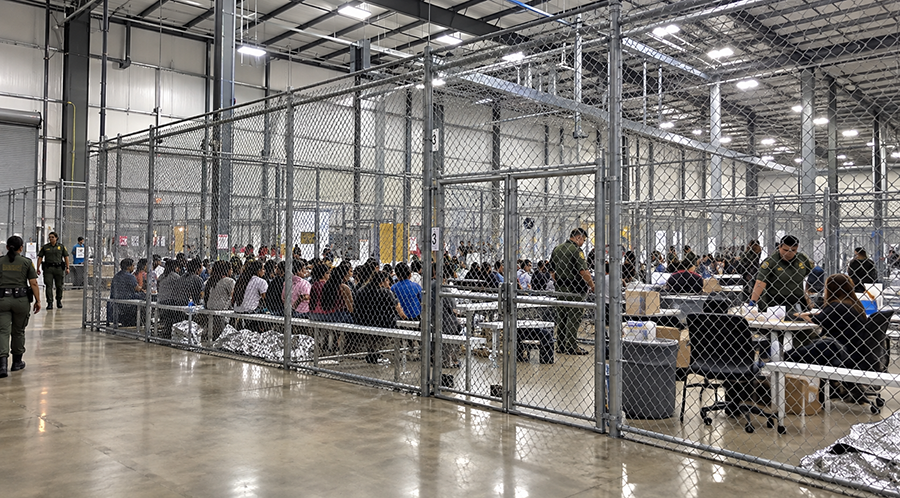
The death rate in U.S. Immigration and Customs Enforcement custody has climbed to the highest level in two decades—88.9 deaths per 100,000 detainees annually as of August 2026, according to TIME Magazine and medical research published in JAMA. This represents a 22-year peak not seen since ICE began comprehensive tracking in the early 2000s, and roughly 33 times the death rate in the general U.S.
population. The spike coincides with record detention expansion and a structural breakdown in medical care. Over 71,000 people were held in ICE facilities in January 2026—the largest population ever detained—while ICE stopped funding third-party medical treatment on October 3, 2025, turning detainees away from outside providers and blocking access to specialized care. Medical reviewers have documented that this change, combined with understaffing, directly contributed to preventable deaths.
Table of Contents
- The Death Toll in Recent Years
- Medical Care Failures and Documented Negligence
- What the Causes of Death Reveal
- How the Government's Frame Differs from Medical Reality
- What This Means for Detainees and Families
- Frequently Asked Questions
The Death Toll in Recent Years
As of June 4, 2026, 52 people died in ICE custody during the first 500 days of the Trump administration, according to NPR. The 33 deaths recorded in 2025 alone set a record high for a single year since ICE's creation in 2003.
When measured against historical rates, the scale becomes stark: in 2004, the death rate was 11.9 per 100,000 detainees; by 2008 it had dropped to 2.9. The current rate of 88.9 per 100,000 far exceeds those early-2000s peaks. Notably, deaths have accelerated at a rate beyond the growth in detention population itself, indicating deteriorating conditions rather than a simple numbers-driven effect.
Medical Care Failures and Documented Negligence
Mortality reviews completed by 2026 found that in 27 of 31 cases examined, medical care "deviated beyond safe limits," with three cases where care deficiencies may have directly or indirectly contributed to death, according to Human Rights Watch and Congressional documents. Physicians documented ignored sick calls, phone-only medical assessments instead of in-person evaluation, medication cutoffs, and failures to initiate or perform CPR correctly during emergencies.
The structural trigger for this breakdown is clear. ICE's decision to stop funding third-party medical care in October 2025 forced detainees to rely entirely on in-facility medical staff already overwhelmed by record-high populations. Detainees who needed specialized treatment—dialysis, cardiac care, mental health crisis intervention—were turned away from outside providers.
What the Causes of Death Reveal
Leading causes of death include cardiovascular events (18.5%), infectious disease including COVID-19 (13.8%), suicide (10.8%), and neurologic causes (7.7%), according to JAMA research reported by NBC News. Nearly half of all deaths—49.2%—are classified as "other or undetermined," a high rate of unresolved causes that suggests inadequate medical documentation and investigation. This distribution points to a pattern of preventable deaths.
A person with untreated respiratory symptoms can deteriorate rapidly without access to imaging or medication. A detainee with an underlying cardiac condition needs routine monitoring. Without in-person examination, phone-based assessment, and constraints on specialist referral, escalating symptoms go unrecognized until they become fatal emergencies.
How the Government's Frame Differs from Medical Reality
The Department of Homeland Security has disputed the term "spike," stating that deaths represent only 0.009% of the detained population, according to NPR. Civil rights organizations and independent medical reviewers counter that this statistic obscures the correct measure: the annualized death rate, which is the standard epidemiological metric for assessing population health crises. By professional medical standards, a rate of 88.9 deaths per 100,000 annually is a public health emergency. The 2026 rate is nearly four times higher than the rate during the Biden administration and roughly 33 times higher than the general U.S. mortality rate of about 2.7 per 100,000, according to public health data cited in TIME Magazine.
What This Means for Detainees and Families
If you or a family member is in ICE custody, document any medical complaints in writing and keep copies. Request in-person medical evaluation rather than settling for a phone assessment, and demand written documentation of any denied care requests. These records become critical evidence if an injury or death occurs. For family members seeking to prevent a relative's detention or secure release, humanitarian appeals to an immigration judge now have documented evidence of systemic medical failure. The published rate of care deviations—87% of reviewed cases—can support arguments for release based on the conditions themselves.
Frequently Asked Questions
How do I document medical neglect if my relative is in ICE custody?
Request all medical interactions in writing, keep copies of sick-call requests, ask for written documentation of any denied care or delayed treatment, and notify your attorney or a civil rights organization immediately if neglect occurs.
Is 88.9 deaths per 100,000 higher than the prison system?
Yes. The ICE detention death rate is higher than most state and federal prison systems and roughly 33 times the general U.S. mortality rate, making ICE custody statistically more deadly than both freedom and criminal incarceration.
When did conditions get worse?
Conditions deteriorated sharply in October 2025, when ICE stopped paying for third-party medical treatment, combined with record detention expansion to over 71,000 people in January 2026.