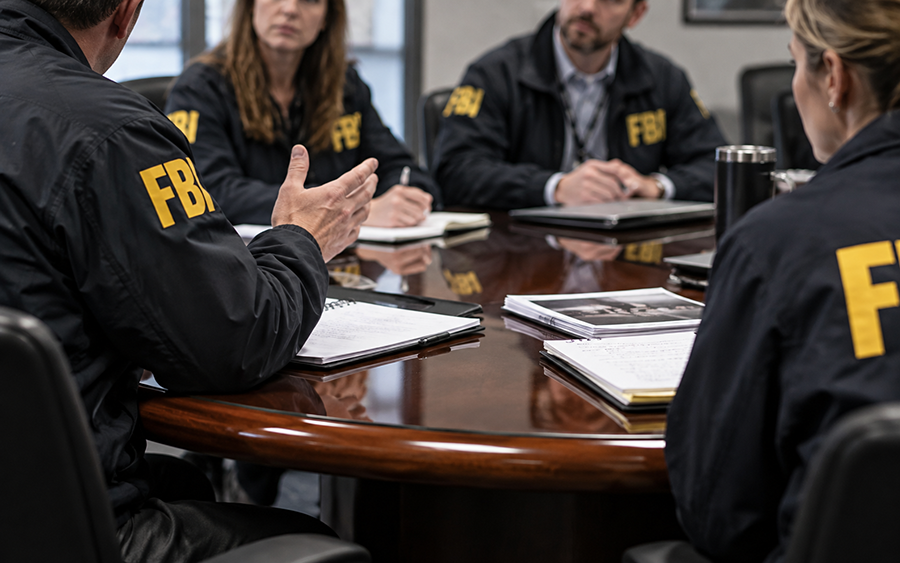
A former FBI supervisor alleges that the White House and senior Justice Department officials ordered the bureau’s Los Angeles office to investigate people who protested immigration enforcement in early 2025, including a group President Trump saw in a TikTok video, even though agents had found no evidence of a crime and FBI policy bars investigations based only on protected speech. The allegations are in a whistleblower disclosure that Senator Alex Padilla of California released on Tuesday, along with a letter demanding answers from FBI Director Kash Patel and Attorney General Todd Blanche.
The whistleblower is Jill Fields, who was a supervisory intelligence analyst in the Los Angeles field office with nearly a decade at the bureau. Her lawyers at the Government Accountability Project and the Law Offices of David Laufman sent the disclosure to Padilla and Senator John Cornyn, the top Democrat and Republican on the Senate Judiciary Committee’s immigration subcommittee, and asked Congress and the Justice Department’s inspector general to investigate. CNN and NBC News reviewed the complaint. The Justice Department has called it politically motivated. Nothing in it has been independently confirmed.
The Two Incidents
The first, in early 2025, began with then-Acting Deputy Attorney General Emil Bove, the president’s former personal lawyer. According to the disclosure, Bove directed the Los Angeles field office to investigate the anti-ICE and CBP protesters who had gathered outside federal buildings in the city, and Fields was told to open an investigation into all of them. She says she knew of no information that any of the protesters had threatened anyone or broken the law.
The second came weeks later, after a February 2025 protest in Alhambra, east of Los Angeles. Demonstrators used bullhorns to warn neighbors that immigration officers were in the area and to tell them about their rights, including the requirement of a judicial warrant to enter a home; the footage was posted to TikTok. FBI personnel reviewed the incident and declined to open a case. Then, the disclosure says, the president viewed the video, and the White House instructed Patel to have the Los Angeles office investigate. At Patel’s first meeting with the office’s special agents, according to the complaint, he said the president was angry about the incident and wanted those protesters investigated and arrested. An analyst under Fields told her the squad had been ordered to run pre-assessment checks on the two to four protesters in the video, and an FBI official whose name is redacted told her the investigation would be opened because the president wants this investigation.
Fields raised the First Amendment problem with her supervisors and was told the probes had to go forward. She consulted the senior FBI official responsible for privacy and civil liberties, who, the complaint says, was dismayed and later told Fields she planned to resign over it.
Retaliation, the Senate Letter and DOJ’s Response
Fields says she was punished for refusing: she was stripped of the team she supervised and eventually resigned. Her disclosure is filed under the federal whistleblower protections that cover FBI employees who report violations of law to Congress.
Padilla’s letter to Patel and Blanche asks how many investigations into protesters are open, whether the president has directed other investigations, what resources were diverted from criminal cases, and how the allegations square with Patel’s sworn testimony to the Judiciary Committee that cases would be based only on the facts and the law. He wrote that the allegations raise grave concerns about the rule of law under their leadership, and set a deadline later this month for a response.
In dismissing the complaint, the Justice Department said the Constitution does not protect violence. The disclosure does not allege violence; it describes people with bullhorns and people standing outside federal buildings.
What happens next depends on Cornyn, who as subcommittee chair controls whether the panel acts, and on the inspector general, who can open an inquiry on his own authority. Absent either, the complaint stays where it is: a detailed account from a career official, released by a senator, and denied by the department it describes.
What This Means for Immigrants and Protesters
If the allegations are accurate, the FBI ran background checks on people for standing on a sidewalk with a bullhorn warning neighbors about an immigration operation, and did so because the president saw them on his phone. The disclosure does not say whether the checks turned up immigration status, whether any information was passed to ICE, or whether the protesters know they were looked at.
That gap is the practical concern. Warning neighbors that ICE is present, filming agents in public and telling people they have the right to see a judicial warrant are all lawful, and have been the backbone of rapid-response networks in Los Angeles and elsewhere since 2025. A pre-assessment check means running names through government databases, and the disclosure describes agents doing that with no crime identified; it does not say which databases. For a protester who is a citizen, the result is a file. For a protester without status, a records check is a risk the protest itself was not.
None of that changes what is legal. Observing and documenting immigration enforcement from a public place is protected; physically obstructing an arrest is not, and that line is where this year’s prosecutions of protesters have been fought. People who do this work should know the line, keep their distance from the enforcement action itself, and assume that what they post may be watched by people with the power to order an investigation.