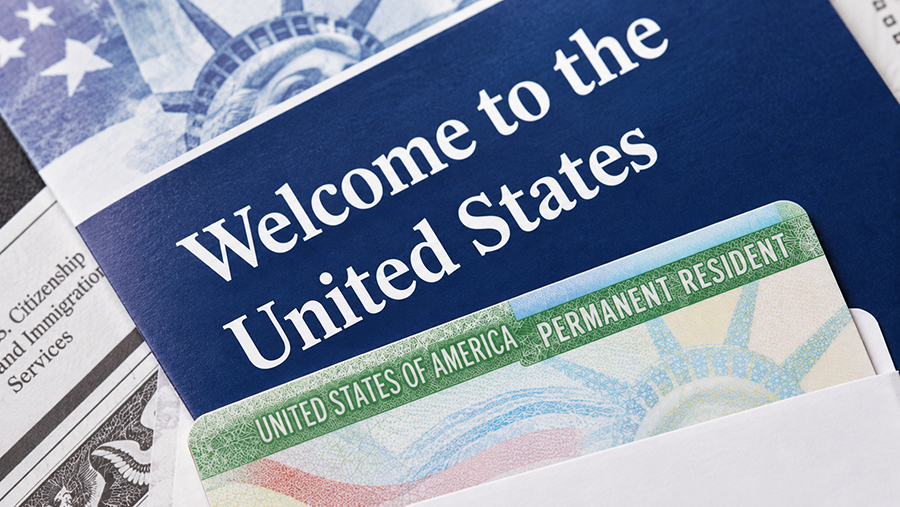
The 2027 Diversity Visa lottery is coming back. After a year in which the State Department never opened registration for the program better known as the Green Card Lottery, a federal court order issued October 14 now requires the department to announce the DV-2027 registration period by October 29, open entries no later than November 1, keep them open for at least 30 days, and notify winners by December 3.
That puts up to 55,000 green cards back on the table for people from countries with historically low immigration to the United States, in a cycle many applicants had assumed was simply gone. The State Department has not yet posted dates on its Diversity Visa Program page, but under the order it has less than two weeks to do so.
Why the 2027 cycle stalled for a year
Registration normally runs for about a month each fall, a year before the visas become available, so DV-2027 entries should have been accepted in October and November 2025. Instead, the State Department said on November 5, 2025 that it was changing parts of the entry process and would announce new dates “as soon as practicable.” No dates ever came.
In December 2025 the department paused issuance of diversity visas altogether while it reviewed screening and vetting procedures. The pause on issuing DV-2026 visas ended in late August 2026 after a separate court order, but the 2027 registration window still had not been scheduled.
A California immigration law firm, Red Eagle Law, sued the Secretary of State in August 2026, arguing the department has no authority to skip a year of a program Congress wrote into law. The court granted a preliminary injunction on October 14, and the deadlines now in force were set in a revised order later that day.
How the DV-2027 lottery will work
The basics of the program have not changed. Entry is free and happens only through the State Department’s official E-DV site during the registration window. Submitting more than one entry per person disqualifies the applicant, and the department has long warned that no third party can improve anyone’s odds.
Eligibility rests on two things. First, the entrant must be a native of a country with low recent immigration to the United States; the list of excluded countries is published with each year’s instructions and for DV-2026 included Mexico, China, India, Nigeria, the Philippines, Canada, Brazil, Venezuela and the United Kingdom, among others. Second, the entrant needs either a high school education or its equivalent, or two years of qualifying work experience within the past five years.
What is new is a passport requirement. Under a State Department rule that took effect April 10, 2026, every DV-2027 entrant must hold a valid, unexpired passport and upload a scan of its biographic page with the entry, with only limited exemptions. A similar requirement applied from DV-2021 through DV-2023 until a court struck it down for being issued without public comment; this version went through that process, and the department says it found roughly 2.5 million fraudulent entries in DV-2025 alone.
The other departure from a normal year is speed. Selection results normally come out in early May; this year they are due within days of entries closing. Selected entrants then apply for visas through the normal process, and the department must keep adjudicating those cases until the 2027 allocation is used up or until September 30, 2027, whichever comes first.
One restriction still applies. The order says processing is subject to applicable law, which means nationals of the 39 countries covered by the travel-ban proclamation in force since January 2026, among them Iran, Afghanistan, Sudan, Somalia, Senegal and Tanzania, generally cannot be issued an immigrant visa even if selected.
A compressed year with real risk of running out of time
A normal diversity visa cycle gives winners about 17 months between selection and the September 30 cutoff. DV-2027 winners will get about ten. Interviews at U.S. consulates must be scheduled, medical exams completed and documents gathered inside that window, and any visa not issued by then is lost. The department’s own status reports in the related DV-2026 case showed interviews resuming slowly after that pause was lifted, and applicants should expect the same sluggish pace this time.
The government can also appeal. The injunction is preliminary, and the administration argued in court that the statutory window for running DV-2027 had already closed. An appeal to the Ninth Circuit would not automatically stop the deadlines, but it adds uncertainty to a schedule that is already tight.
President Trump has called for ending the lottery outright. A court can order the department to run DV-2027, but it cannot control how quickly consulates move.
What this means for immigrants
Start preparing now rather than waiting for registration to open. Once dates are announced, treat any website other than the official E-DV site that claims to take entries, or that charges to submit one, as a scam.
Have a valid passport and a compliant photo ready now. A passport that has expired will not qualify, photo problems are a leading reason entries are disqualified, and a 30-day window leaves little room to fix either. Gather your education or work history, plus the names, dates of birth and photos of a spouse and any unmarried children under 21, who must be listed on the entry.
If you are selected, file the DS-260 and book the medical exam the moment the department allows; this cycle has no room for a slow start.