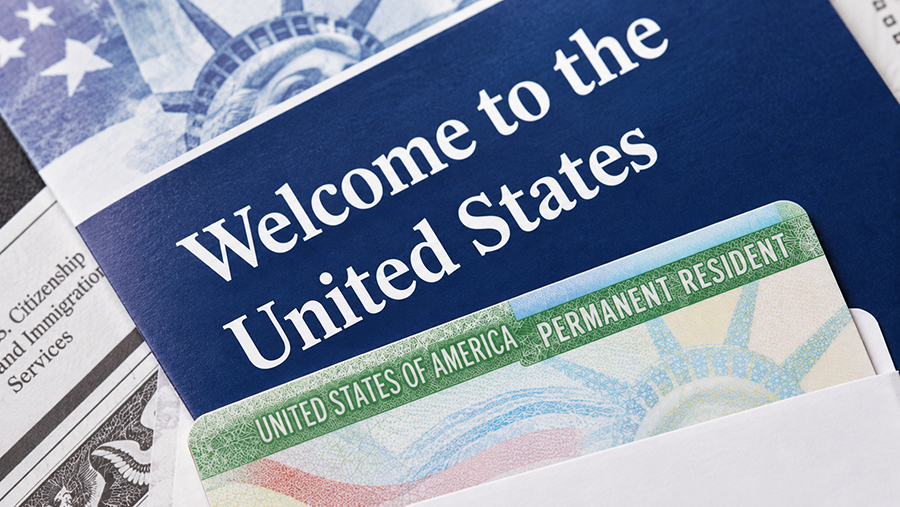
A green card application does not automatically fail if the sponsor's income falls short of the requirement, but the applicant can only proceed if the gap is documented and covered through household member income, assets, or a joint sponsor. This prevents applicants from becoming public charges—people likely to depend on government assistance.
USCIS sets the income threshold at 125% of the federal poverty guideline for the sponsor's household size. For 2026, this means $41,250 for a household of four in the 48 contiguous states. When a sponsor cannot meet this threshold alone, the applicant does not automatically become ineligible—instead, USCIS examines whether the gap can be covered through documented household resources, assets, or a joint sponsor before making a decision.
Table of Contents
- What Exactly Is the Income Requirement?
- How Income Falls Short Affects Your Case
- Using Household Members to Close the Income Gap
- Assets and Joint Sponsors as Alternatives
- The Long-Term Nature of the Sponsorship Obligation
- What to Do If You Cannot Meet the Requirement
- Frequently Asked Questions
What Exactly Is the Income Requirement?
A sponsor must document household income equal to at least 125% of the federal poverty guideline for their household size. For 2026, this is $41,250 for a household of four in the 48 contiguous states, with higher amounts for larger households and slightly different figures for Alaska and Hawaii.
This requirement exists under the "public charge" rule—a legal standard that prevents applicants from being admitted if they are likely to depend on government benefits like SNAP, Medicaid, or housing assistance. The sponsor's income must be verified through recent tax returns, pay stubs, and employment letters; past income or future earning potential cannot substitute.
How Income Falls Short Affects Your Case
An income shortfall does not automatically disqualify the applicant. Instead, the sponsoring household can cover the gap through documented sources: another household member's income, household assets valued at a specific multiplier, or a joint sponsor who independently qualifies and is willing to sign.
If no documented path exists to close the gap, USCIS denies the application on public charge grounds and finds the applicant inadmissible. This is not a permanent bar—the applicant can reapply if circumstances change and the sponsor's financial situation improves.
Using Household Members to Close the Income Gap
A spouse, parent, or other household member living with the sponsor can contribute their income to close the gap. This household member signs form I-864A and their income is counted the same way as the sponsor's, backed by recent tax returns, employment verification, and other documentation. However, the household member becomes jointly and severally liable for the full support obligation—meaning they can be sued directly if the sponsored immigrant later needs government assistance.
This is a real legal consequence, not a formality. The household member's liability continues indefinitely, regardless of whether their relationship with the sponsor or immigrant changes.
Assets and Joint Sponsors as Alternatives
If household income is insufficient, assets can substitute—worth five times the income shortfall for most cases, or three times if the sponsor is a U.S. citizen sponsoring a spouse or adult child. These assets must be convertible to cash within one year and are verified through bank statements, investment account statements, property deeds, or similar documentation.
A joint sponsor is another option. USCIS requires that the joint sponsor independently meet the 125% income threshold and cannot share income with the primary sponsor. Like a household member, the joint sponsor becomes jointly and severally liable for the full support obligation and signs the affidavit of support with the same indefinite legal commitment.
The Long-Term Nature of the Sponsorship Obligation
The affidavit of support (Form I-864) does not expire when the immigrant becomes a permanent resident, turns 21, or acquires U.S. citizenship. The sponsor's obligation is indefinite and enforceable—the immigrant can sue the sponsor for support if they do not receive it, and government agencies providing means-tested benefits may pursue reimbursement from the sponsor for the period during which the I-864 is valid.
This liability is commonly enforced when a sponsored immigrant applies for Medicaid, SNAP, or housing assistance. Sponsors should understand that signing the form creates a permanent legal and financial responsibility, not a temporary one tied to the immigrant's initial adjustment to the U.S.
What to Do If You Cannot Meet the Requirement
If your income is insufficient and you cannot find a joint sponsor or household member willing to help, the application cannot proceed until the gap is closed. Evaluate these options: Speak with a qualified immigration attorney to determine which approach fits your situation and timeline.
- Wait until your income increases and reapply
- Find a joint sponsor who independently qualifies and is willing to sign
- Document assets worth the multiplied shortfall amount
- Have a household member contribute income and co-sign the I-864A form
Frequently Asked Questions
If the sponsor and immigrant later divorce, does the I-864 obligation end?
No. The affidavit of support remains binding indefinitely and does not end if the sponsor and immigrant divorce, the immigrant becomes a U.S. citizen, or the marriage is annulled.
Can a joint sponsor and the primary sponsor combine their income to meet the threshold?
No. The joint sponsor must independently meet the 125% income threshold on their own and cannot combine or share income with the primary sponsor.
Can the government make the sponsor repay benefits the immigrant receives?
Yes. State and local agencies providing means-tested benefits to the sponsored immigrant may pursue reimbursement from the sponsor for the period during which the I-864 is valid.