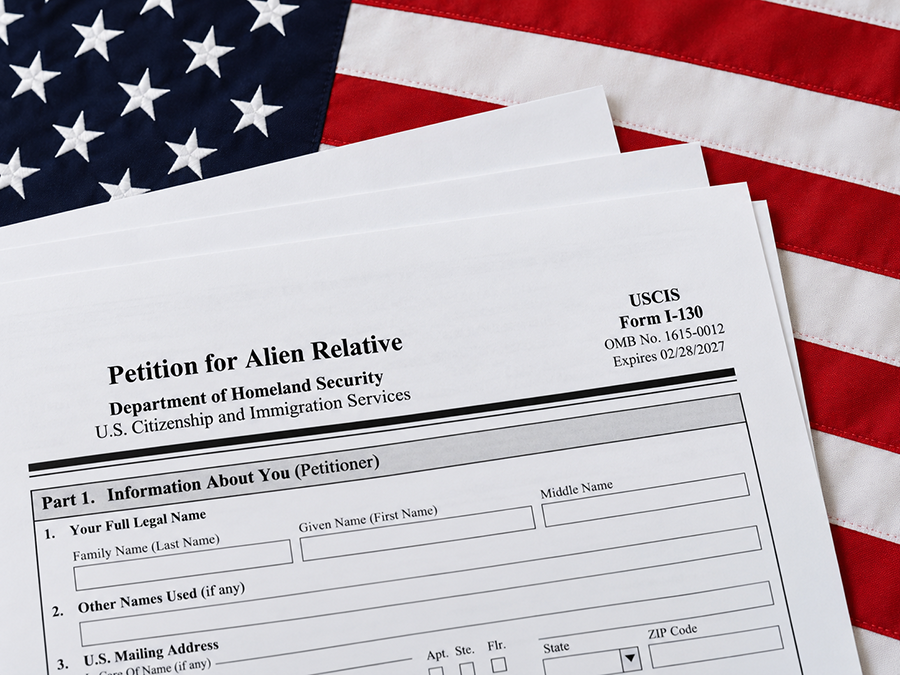
After USCIS approves your Form I-130 family petition, the case moves to the next agency—either the National Visa Center (NVC) if you live abroad, or directly into green card adjustment if you're already in the U.S. The I-130 approval itself does not grant you immigration status or the right to work or travel—it simply establishes your eligibility to apply for a visa or adjustment. The path forward depends on where you are.
Beneficiaries abroad will go through consular processing at a U.S. embassy or consulate; those already in the U.S. can apply for adjustment of status directly. Both routes involve additional forms, background checks, and waiting periods, and neither process moves faster without understanding the rules that control it.
Official resources:
- Check eligibility on Uscis’s official study page — Use this page to check the study’s participation requirements.
- Read the official notice from Uscis — Use this primary source to verify the official announcement.
Table of Contents
- What the National Visa Center Does
- Checking Visa Availability and Your Priority Date
- The Path Forward: Consular Processing or Adjustment
- Work, Travel, and the Real Timeline
- The Final Step and Key Deadlines
- Frequently Asked Questions
What the National Visa Center Does
Once USCIS approves your I-130, it forwards the petition to the NVC if you are processing abroad. The NVC creates a case file, assigns a case number, and sends you an invoice ID—but these arrive separately, and you cannot begin paying fees or submitting documents until the NVC sends an instruction letter with specific next steps.
The case sits at NVC while your visa priority date moves through the State Department's allocation system. The NVC does not control the timeline; it processes cases in the order they arrive, but your actual progress depends on visa availability in your category and country.
Checking Visa Availability and Your Priority Date
Your priority date is the receipt date on your original I-130 petition. You check whether an immigrant visa is available for you by matching your priority date against the State Department's monthly Visa Bulletin for your country of chargeability. The Visa Bulletin shows a "final action date" (the earliest priority date that can move forward) and a "cut-off date" for new applications—if your priority date is earlier than the final action date, you can proceed to the next phase.
This system exists because visa numbers are limited each year. Immediate relatives of U.S. citizens—spouses, parents, and unmarried children under 21—have no visa number limit and typically process faster than family preference categories, which depend on annual allocation. For family preference cases, visa availability can take years.
The Path Forward: Consular Processing or Adjustment
If you're outside the U.S., you'll proceed through consular processing. Once the NVC notifies you that a visa is available, you must complete form DS-260 online, gather civil documents (birth certificate, marriage certificate, police records), undergo a medical exam, and attend an interview at a U.S. embassy or consulate.
You must apply for your immigrant visa within one year of visa availability or risk your petition being terminated. If you're already in the U.S., you can skip the embassy and adjust your status directly. You file Form I-485 once an immigrant visa is available; this form can include Form I-131 for travel permits and Form I-765 for an employment authorization document (EAD) at the same time.
Work, Travel, and the Real Timeline
An approved I-130 grants you neither work authorization nor the right to travel. Beneficiaries abroad cannot legally work, and those in the U.S. adjusting status must file Form I-131 for travel or Form I-765 for work authorization separately. If you need to work or leave the country before your green card arrives, you must complete these additional applications and wait for approval—the I-130 approval alone will not protect you.
Processing timelines vary widely by country and visa category. A case for an immediate relative might move within 1–2 years; family preference cases often take 5–10 years or longer depending on the preference level and visa availability.
The Final Step and Key Deadlines
Immigrant visas are valid for six months from issuance and must be used to enter the U.S. within that window. If your visa expires before you travel, it cannot be renewed—you must go back through the NVC to reopen your case. An approved I-130 also does not automatically clear prior inadmissibility issues (such as a prior overstay or unauthorized entry); you may still need a waiver like Form I-601A if you have a ground of inadmissibility.
Check the NVC website regularly using your case number for status updates. The next instruction letter always states the exact documents needed and the deadline for submitting them.
Frequently Asked Questions
Can I work while my I-130 is approved but my visa is not available yet?
No. An approved I-130 does not authorize work. You must file Form I-765 separately and receive approval before you can legally work. Those already in the U.S. can apply for work authorization concurrently with their adjustment application.
What happens if my priority date never becomes current?
Visa availability depends on annual allocation and is controlled by the State Department. For family preference categories, dates can remain unavailable for years. You cannot move forward until your priority date is current in the Visa Bulletin.
Do I need a waiver if my I-130 is approved?
An approved I-130 does not clear all grounds of inadmissibility. If you have a prior overstay, unauthorized entry, or criminal history, you may need Form I-601A or another waiver before consular processing or adjustment can complete.