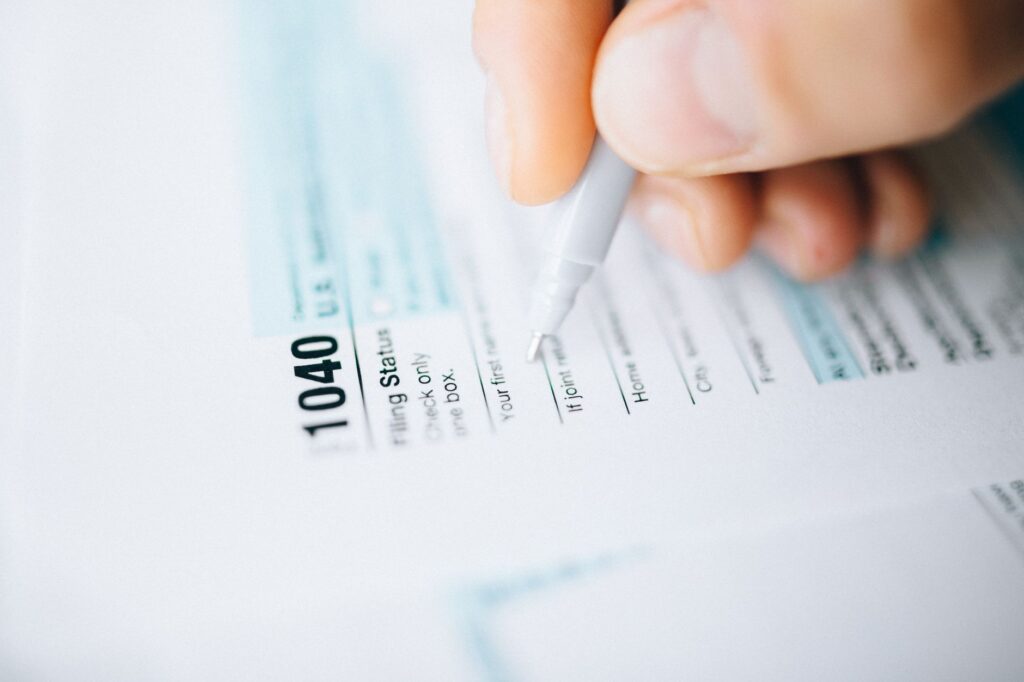
You should bring certified tax returns or IRS transcripts for the past 5 years (or 3 years if filing jointly as a married couple) to your naturalization interview, though USCIS's N-400 Instructions state that they're not required for every case. USCIS uses them to verify that you've paid your taxes and lived in the U.S. continuously as a permanent resident. Most applicants will need them; exceptions include those with no tax filing obligation due to low income.
Bring originals or court-certified copies to your interview, not photocopies. If you've traveled outside the U.S. for 6 months or more as a permanent resident, tax documents are even more critical—they prove you maintained U.S. residence during your green card years. If you owe back taxes or missed filing deadlines, you'll need additional documentation from the IRS before your interview.
Table of Contents
- What Tax Documents USCIS Expects
- When Tax Returns May Not Be Required
- If You Owe Back Taxes or Missed a Filing Deadline
- What Format and Type of Documents to Bring
- Why USCIS Asks for Tax Returns
- Frequently Asked Questions
What Tax Documents USCIS Expects
USCIS expects you to bring irs tax transcripts or certified copies of tax returns for the past 5 years (or 3 years if you're applying through marriage). You can order transcripts directly from the IRS using Form 4506-T, which arrives by mail within two weeks. You don't have to order them—bringing your own filed copies is acceptable—but certified versions carry more weight if the officer wants to verify them against IRS records.
If you left the U.S. for 6 months or longer while you were a permanent resident, tax documents become your primary way to prove continuous residence. USCIS tracks departures and looks for the physical record that you were working, paying bills, and filing returns during the years you claim to have lived here. Without tax documents in that situation, the officer may question whether your green card time actually counted toward naturalization eligibility.
When Tax Returns May Not Be Required
Not every applicant needs to file federal tax returns. USCIS's N-400 Instructions tell you to check IRS guidance on whether you were required to file in each year. If your income was below the filing threshold for your age and filing status during the years you held your green card, you had no obligation to file.
Bring documentation of that determination—a letter from the IRS, your tax software records, or your own calculation—to show the officer why you didn't file. The same applies if you didn't work during some years because you were a dependent, a spouse supporting the household, or taking unpaid leave. Be ready to explain why the years are missing, and bring any evidence of income or household status that clarifies the situation.
If You Owe Back Taxes or Missed a Filing Deadline
If you owe back taxes to the federal government or a state, you must bring a signed agreement with the IRS or state/local tax office showing that you filed the return and arranged a payment plan. You also need current documentation proving you're on track with that plan—a recent statement from the IRS payment portal, a letter from the tax office, or a bank statement showing recent payments.
Failing to address back taxes before your interview will delay your application or result in a denial. If you failed to file a federal tax return while you were a permanent resident, contact the IRS immediately and file before your interview. Bring all correspondence between you and the IRS about the missed filing. The officer is looking for evidence that you're resolving the issue, not ignoring it. Showing up at the interview without addressing a missed filing puts your application at risk.
What Format and Type of Documents to Bring
Bring originals or court-certified copies of your tax documents to the interview, not photocopies. You can submit photocopies with your N-400 application months in advance, but USCIS requires certified versions at the interview itself. If you don't have the originals, order certified copies from the IRS or your state tax office. Request them early—delays from government offices are common.
For marriage-based applicants, joint tax returns or transcripts for the past 3 years prove that you and your spouse share a household and finances. If you didn't file jointly, bring other shared documents like a lease or mortgage in both names, joint bank account statements, or your children's birth certificates naming both parents. The goal is to show the officer that your marriage is genuine and ongoing.
Why USCIS Asks for Tax Returns
USCIS measures tax compliance as one indicator of eligibility for naturalization. According to USCIS's naturalization fact sheet, it demonstrates that you've met your obligations as a permanent resident and understand U.S. civic responsibilities, which are part of the naturalization test. Tax returns create a documentation trail proving you lived in the U.S., earned income, and participated in the economy during your green card years.
Together with your arrival records and employment history, they support your claim to continuous residence and good moral character. They're one of several forms of evidence USCIS reviews, but a significant one.
Frequently Asked Questions
Can I use photocopies of my tax returns at the interview?
No. Bring originals or court-certified copies. You can submit photocopies with your N-400 application, but USCIS requires certified versions at the interview.
What if I didn't earn enough to file taxes in some years?
Check IRS guidance on whether you were required to file for your age and income level. If you had no filing obligation, bring documentation of that determination and be ready to explain.
How do I get IRS transcripts if I don't have my original tax returns?
Order them using IRS Form 4506-T. Transcripts arrive by mail within two weeks. You can also call 1-800-829-1040.
If I owe back taxes, can I still apply for naturalization?
Yes, but bring a signed agreement with the IRS or state tax office showing you've filed the return and arranged a payment plan, plus current proof you're making payments on time.